In terms of teamwork and workload between each member, the project was very much a success. We both knew what we were looking for with the project and spent little time arguing over initial details. We worked together, not against one another, and came up with a good layout and design that we are happy to move forward with. The project taught us the value of initial paper prototyping and the ease at which they can be created. By giving user’s the prototypes we managed to gather a lot of usable feedback that we would have otherwise not considered going forward.
We did not encounter any issues with the project working as a group. We each divided the workload between us and contributed to each individual part where it was needed. The report and the presentation were both collaborative efforts that combined all the elements we had been working upon as a group.
The scenarios and persona creation were some of the more useful parts of the project, I found. Being able to create life like relations and scenarios with created people allowed a more empathetic approach to the design.
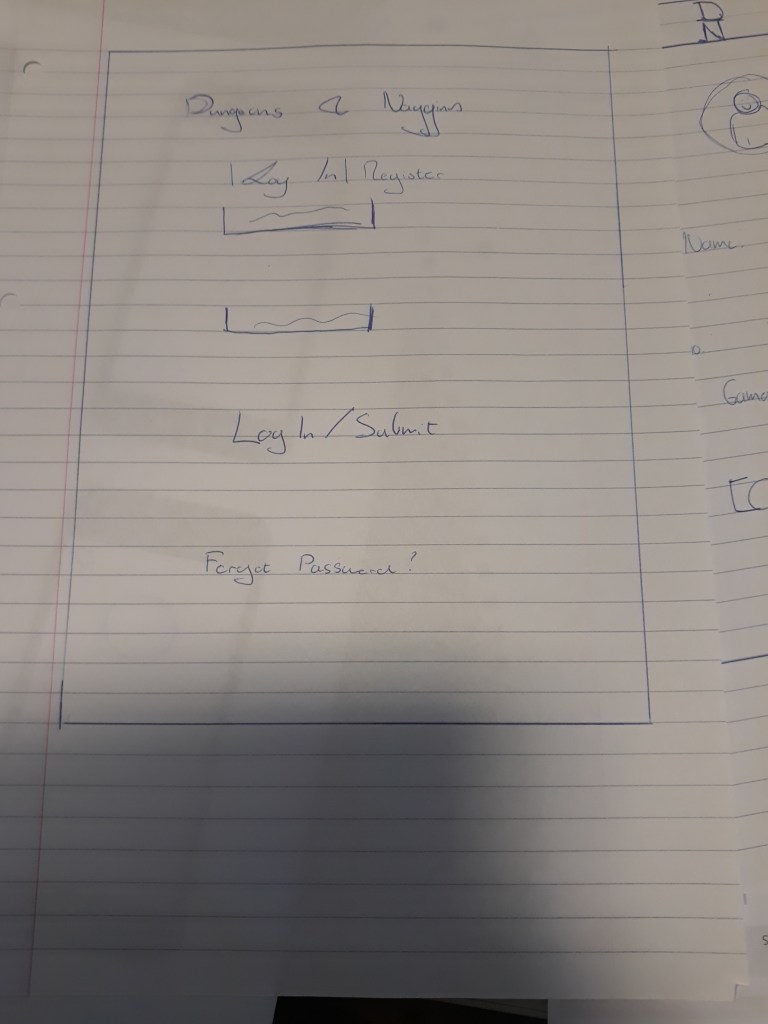
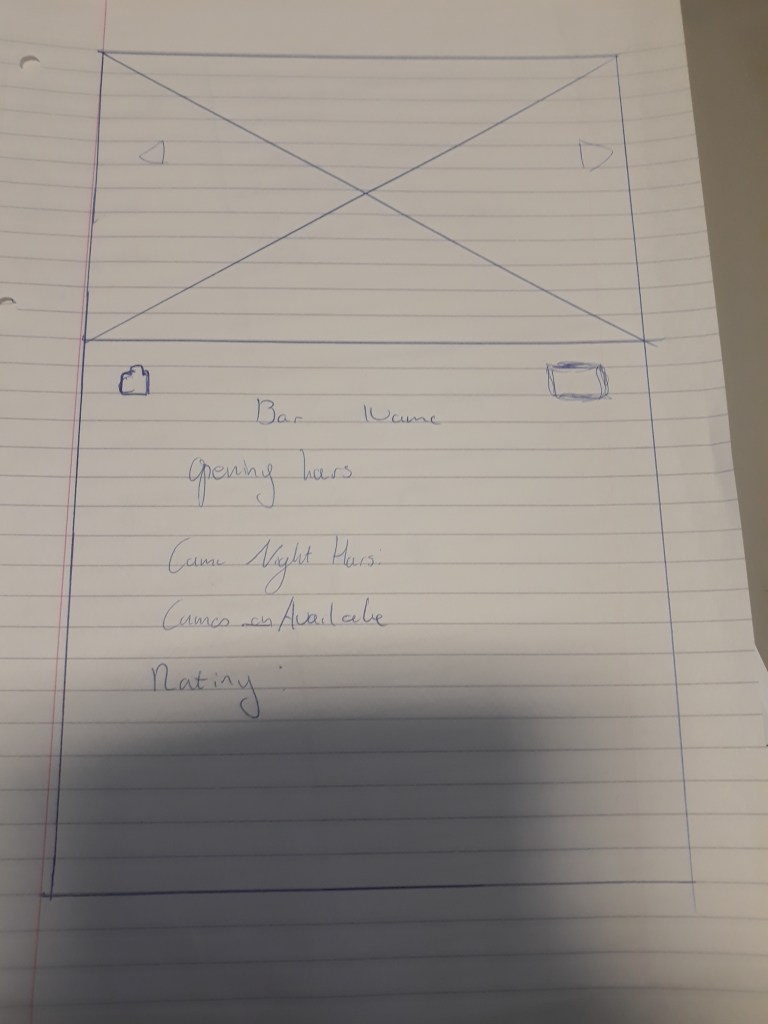
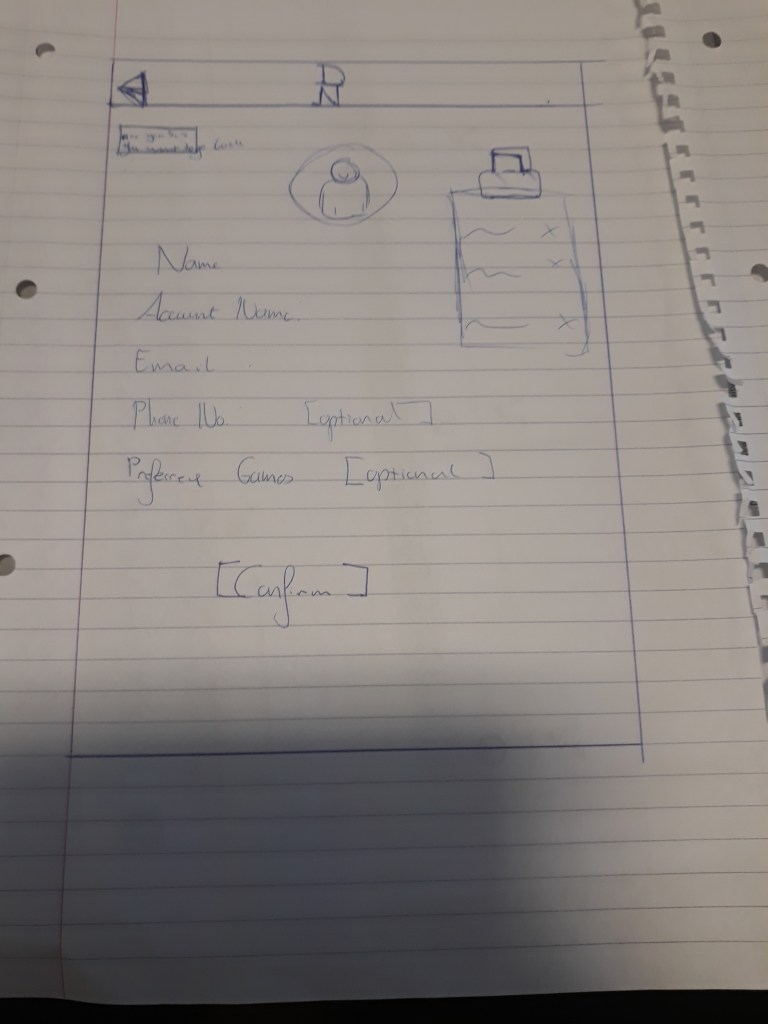
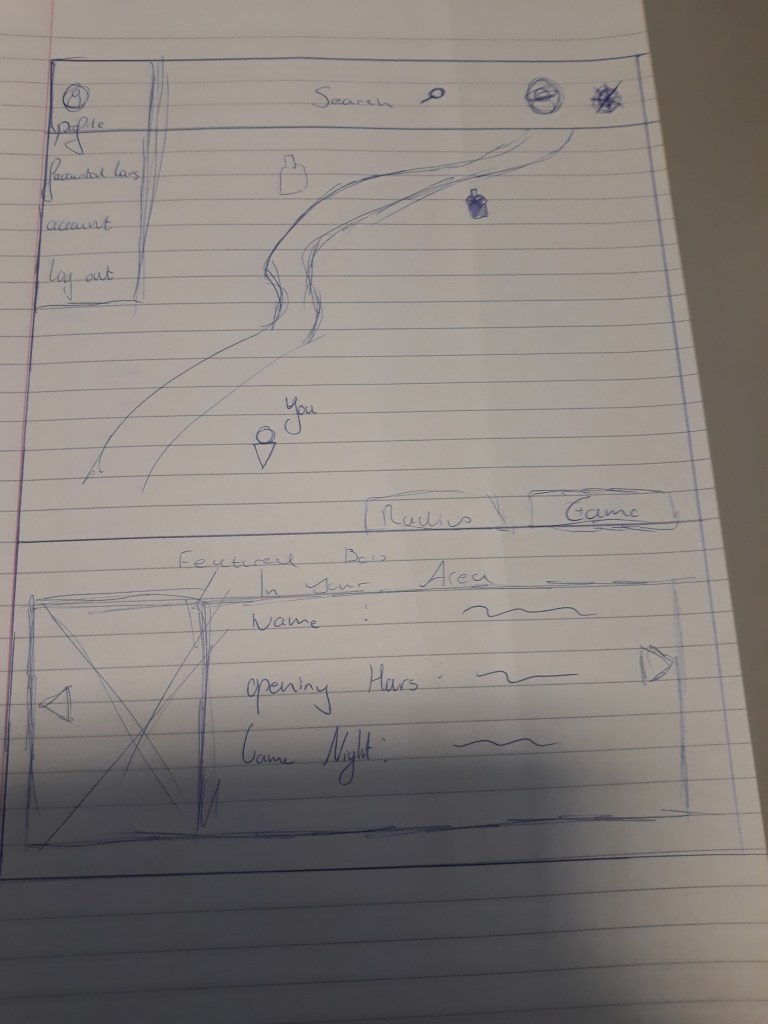
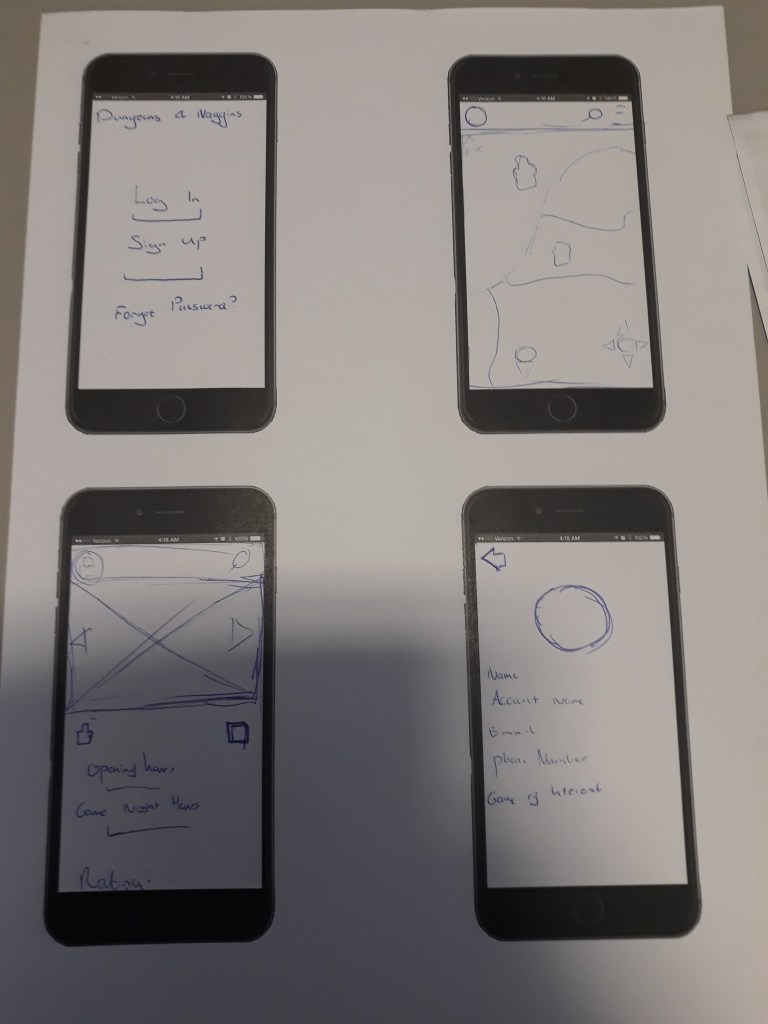
Our initial paper prototyping designs were fairly rudimentary, but they served as a valuable way of getting ideas onto, literal, paper and to toy around with basic UI layouts and designs. Through these paper prototypes, we refined the look we wanted to settle with and iterated upon them as a group. By combining both of our works and improving on the design we were able to come to a conclusion on a style of layout that we liked and thought would fit with the project.
First Iteration
Our first prototypes mainly consisted of the process of logging in to the application and being brought to the initial map menu that would compose the majority of the user’s first screen. When brought to other users for testing, they found the process simple to follow and understand. This satisfied our requirement of it being easy to use and require very little learning to properly utilize. Feedback was given for how we could implement a larger view of a selected bar and potentially a user profile function. These were taken into consideration for our next prototype, and then the combined prototype.
Second Iteration
For our second iteration of the design we took some of the feedback given with regards to the inclusion of a larger bar view, and the start of a profile page for users. The idea behind the profile page would be for later integration with more ‘social’ features, such as being able to add friends through the app and organize groups for further nights out. The bar profile would display what games the bar had on offer, what users rated their experience of the bar was and what their opening and closing times were.
Group Iteration
This version featured some more changes we made to some of the pages and overall cleaning up the design of the map, to make it less cluttered. One critical piece of feedback was the presence of items or elements that had little explanation and served only to bloat the design. The featured bars elements were also removed, as users felt that not having the full map available was detrimental to the app’s design.
For our project we needed to conduct user research to get a better idea of people’s needs and wants. As our project was aimed at a niche market, getting feedback exactly focused from that market was the most important thing. In order to properly achieve this feedback, we created an online survey and sent it to a number of people. We also posted the survey link onto Reddit, specifically the r/DnD and r/DnDNext subreddits.
As said, because our project was aimed at a niche market, it was important to directly to users who engage in that particular genre of tabletop gaming. In addition, we also carried out several interviews among those interested in tabletop gaming and those who already engage in it.
Overall, around 16 people took our online survey and 5 people were interviewed. Of those who took the survey, the age range was between 16-25 on average, with one user in their 40s. Of those surveyed, most organised their sessions through messaging applications such as Discord or Whatsapp and many did not even consider the possibility of using an app to look for locations that do tabletop game nights in their area.
Around ten of those surveyed said they would use such an app for face to face gaming sessions. In particular, those who are a part of the Dungeon’s & Dragons “Adventurer’s League”, an official session ran by volunteer Dungeon Master’s who cater to those that cannot commit or cannot find their own groups, said that they would consider using an app like this to find more casual games or ‘one-shots’.
Feedback from interviewed people was very positive and provided some points with regards to future development. One interviewee made note that it would be helpful for those on a tighter budget if the app could highlight bars or venues that were offering discounts or deals on nights where tabletop games were being held. Another piece of feedback was in regards to how the profile system could be expanded and integrated with additional features, but we felt that this was more for future development.
Personas
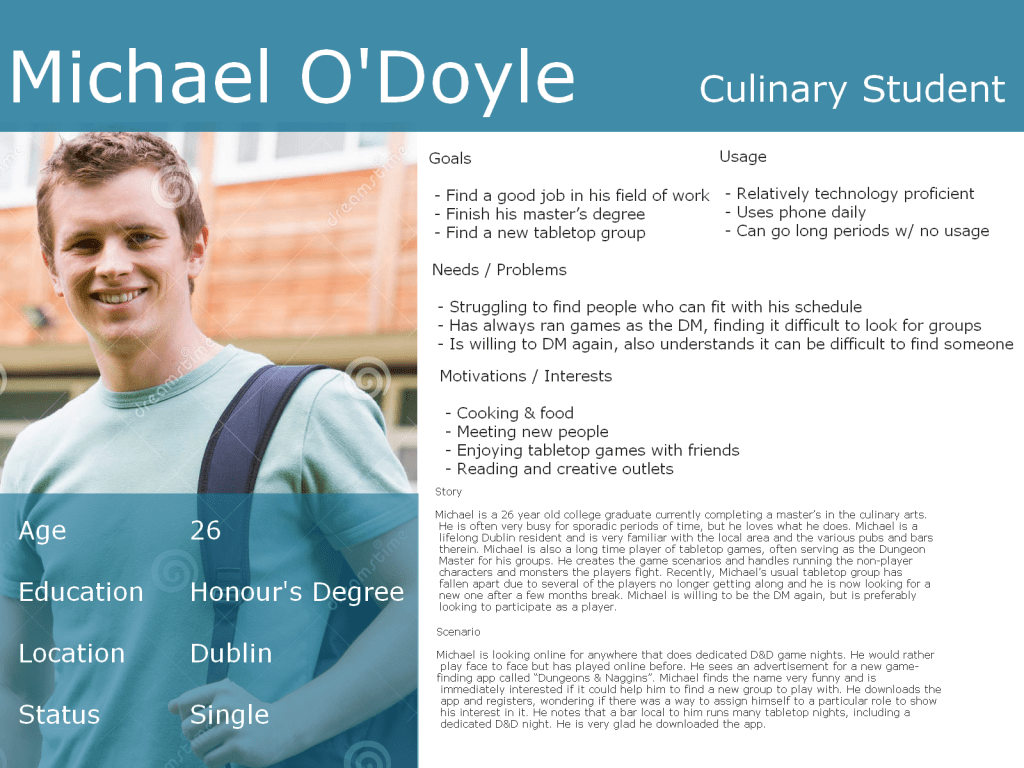
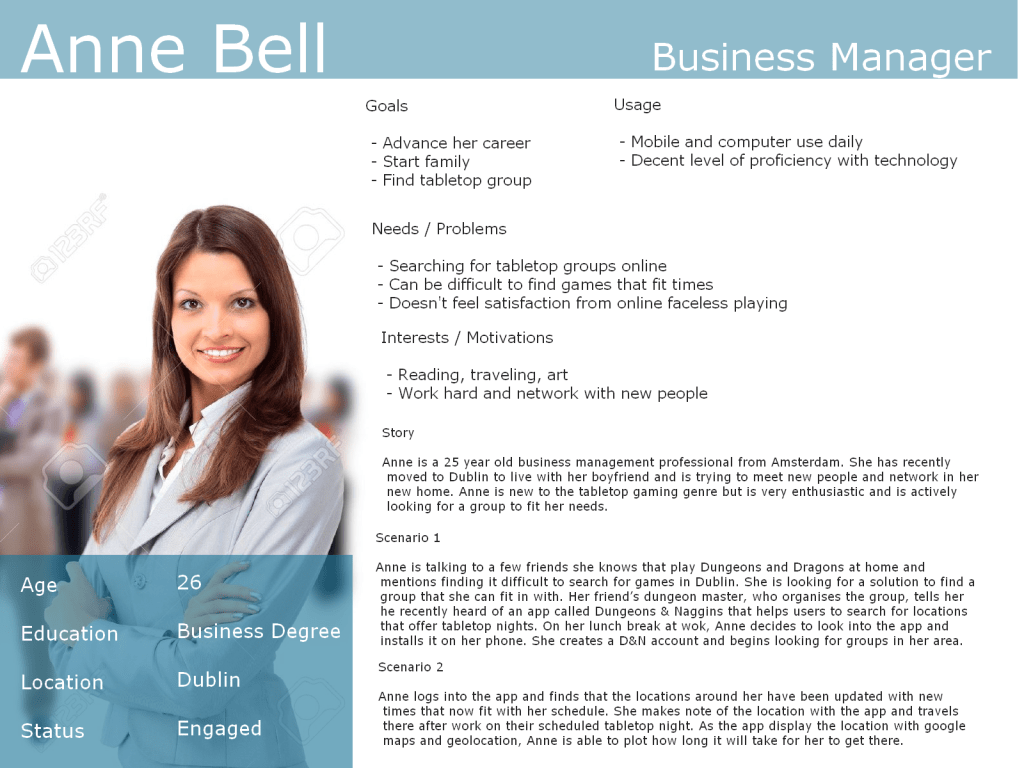
Once we received our feedback from both the interviews and surveys, we set about constructing our personas. To provide a more real, human experience, we described their background, their goals and problems and what they’re looking for currently. Our personas covered the type of people who would find general use out of the app. Both personas created gave an idea as to what someone who is only casually involved in the tabletop gaming genre would be looking for and someone who is more experienced.
Once we came up with the personas, we created a story for the users and scenarios in which they made usage of the app. Below are the two personas created representing the general user based on feedback we received from the survey and interviews.
The Problem A lack of dedicated options for finding games
In recent years, there has been a resurgence of popularity around the tabletop gaming genre. Dungeons & Dragons in particular has seen a modern day revival among the younger generation, with more games being played than ever. However, that does not mean that it is easy nor feasible to gather the amount of people required to play. For many who are interested in playing, a lack of dedicated stores or locations capable of running these games can kill any such plans of playing immediately. While it is also now possible to play online for these games, some people desire the face to face, in person style of playing more.
While tabletop games such as Dungeons & Dragons or Warhammer can be seen as niche, this idea can also be applied to more conventional board games. For many interested in this more socially focused experience, the lack of a proper way to find locations or bars that may cater to these games is an issue.
The Solution Dungeons & Naggins – A mobile app for finding local tabletop games.
Our idea for solving these issues revolves around the usage of our app to find local bars and venues that are capable of hosting these nights, or highlighting those that already do. The app is simple in that it calls upon the Google Maps and Geolocation APIs to pin point the user’s location and to display to them any venues in their area, in a controllable and filterable radius.
The app will allow users to locate bars and venues in their local area.
The app will allow users to save and favourite bars for easier access.
The app will also display bars and venues to display deals on these event nights.
Bar owners will also be able to create profiles for their locations that will be displayed on the API map. These profiles can display opening and closing hours, if there are deals on for tabletop nights, and the schedule of games available.
The app will be available as a mobile app and also as a web app. While it is being developed for android systems, it will be made as wide-ranging as possible.
Once these functionalities are implemented we would like to look at improving systems for a more social-platform oriented feature. These would make it easier to find groups and also to be in contact with them, or find ways of setting up groups for games on the night.
 Professional Practice Blog